


 EN
EN  NL
NL 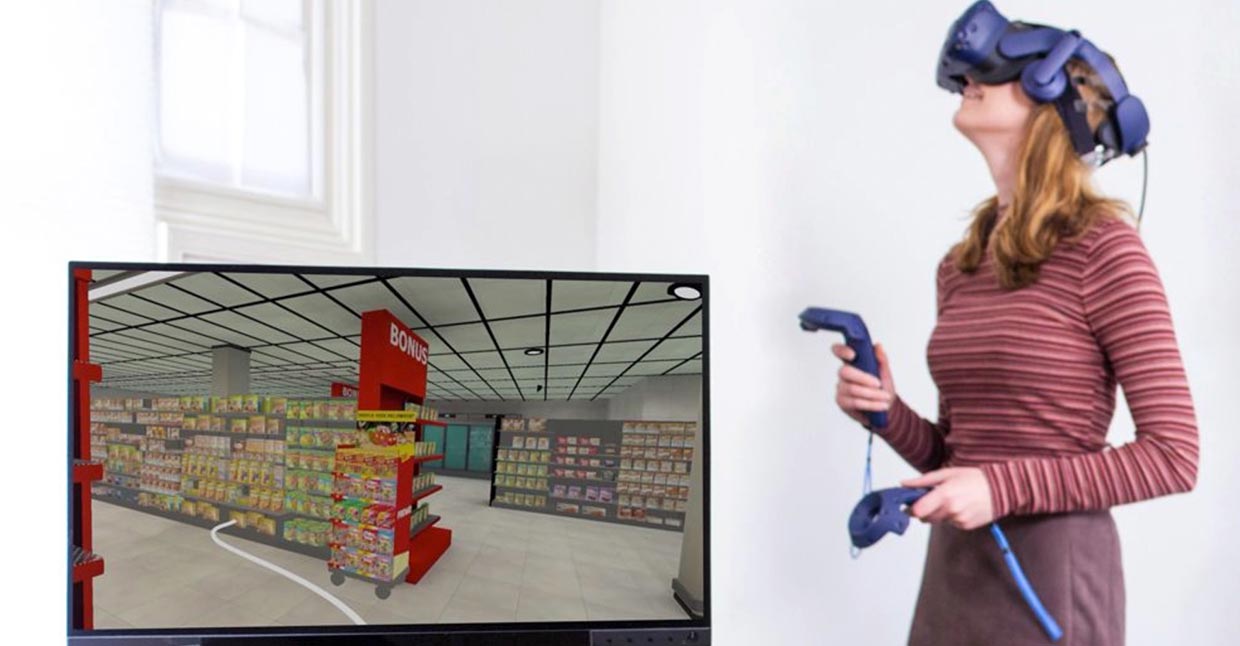
Neuromarketing, Artificial Intelligence (AI), and Machine Learning: How Can You Use These Techniques?
Neuromarketing is the study of consumer behaviour through measuring brain activity. Consumer psychology is closely related: it focuses more on applying psychological persuasion tactics.
Artificial intelligence seems to lie on the opposite side of the scale for many: where psychology is considered a social science, artificial intelligence is much more computational and is often placed within the realm of the natural sciences. However, this contrast does not tell the whole story; the integration of AI with consumer psychology can accelerate the field of neuromarketing in the coming years. By combining rapid innovations in measurement methods, algorithms, and data management on both sides of this divide with a good dose of creativity from both science and practice, we will discover many applications in the near future.
Artificial Intelligence, Machine Learning, Deep Learning. What is the difference?
Within artificial intelligence, different streams can be distinguished. Artificial Intelligence, beyond the hype, is nothing more than a collective term for statistical methods with a self-learning element.
Machine Learning
The most well-known of these is machine learning. Here, known mathematical and statistical methods are applied to create a predictive model. One of the most well-known and easy to interpret is a regression model. This model is built by drawing a line as accurately as possible through the data points. By statistically estimating the best combination of multiplications - the so-called weights - of the variables - the predictors -, a machine learning model is created that makes a prediction based on new data using this regression line.
In the same vein, there are many other models that fall under machine learning, such as k-nearest neighbours, decision trees, and support vector machines.
Deep Learning
Another well-known term is deep learning. Deep learning is related to machine learning but is often considered separately. Deep learning is a completely self-learning model where a neural net is created (for example: convolutional neural net (CNN), recurrent neural net (RNN), Long Short Term Memory Networks (LSTM)). A neural net is a network where the data serves as input and is then reduced through various layers to a prediction of the outcome variable.
What is the difference between Machine Learning and Deep Learning?
Both methods have their pros and cons. Machine learning models are often easier to interpret but generally slightly less accurate, whereas this is the opposite for deep learning models.
Intelligence from Both Sides
Within the neurosciences, these methods have also been increasingly applied recently; and to a greater extent.
Conversely, it has been the case for a longer time: artificial intelligence has learned a lot from the neurosciences. The name for the algorithm even comes from there: the neural network. Its development has been largely facilitated by brain research, where it was realised that brain functions stem from the connectivity between neurons; Hebb’s famous “Neurons that fire together, wire together.”
This principle is also applied within artificial neural networks: building a network ensures that information can be effectively stored and retrieved. Conversely, this computational approach also provides new insights into fundamental neurosciences, although the use of the methods in applied neuroscientific research only emerged later.
What has changed since the early days?
What long hindered the development of artificial intelligence within neuroscience was the lack of data. Because it is very time- and labour-intensive to collect a lot of data, it was difficult for a long time to create a good predictive model. Often the model was guilty of overfitting: it relied too much on the training data and could not generalise well to new data on which predictions were to be made.
With an ever-growing network of open science and standardisation of protocols within neuroscience, this problem is slowly diminishing. Algorithms are also being developed to learn based on less data, without losing generalisation power. In fact, both the researcher and their model and training data are becoming a bit smarter.
Artificial Intelligence on Your Brain?
The applications currently largely occurring in EEG research can be divided into six categories:
- Recognising and classifying emotions
- Applying motor imagery to control a robotic arm or prosthesis (motor imagery brain-computer interfaces)
- Signalling mental workload
- Detecting a seizure in epilepsy
- Automating event-related EEG analysis (event-related potentials; ERP)
- Scoring sleep stages
Neuromarketing research has focused more specifically on recognising a like/dislike status and predicting consumer preferences and behaviour.
Predictive models based on brain data are often built in this way: a product/video/image is viewed, and then the emotion it evokes is indicated. Based on this labelling, the model is then trained. Additionally, there are studies where emotions are elicited through videos or music.
Machine Learning and Usability Research
Through artificial intelligence on eye tracking, a model can also be built to identify the reader's viewing patterns. This makes it easy during a usability study to determine how much time the reader actually reads, and which part of the text is viewed more scanningly.
Machine Learning and A/B Testing
Another interesting synergy of machine learning and psychology is seen in A/B testing. A/B tests are aimed at optimising a website's conversion (CRO). Agencies specialising in the psychology behind online sales, such as Unravel Behavior, provide advice to adjust design, structure, text, and other UX elements based on psychological insights.
Because websites are often dynamic and content is quickly changed on, for example, search pages or blogs, an A/B test cannot always be conducted significantly. In that case, machine learning is used: by continuously (online) optimising the model, the optimal variant is recognised earlier, and the website misses fewer conversions as a result.
Machine Learning and Retail Research
In analysing our research at Unravel Research, we also make extensive use of machine learning.
For example, during our (Virtual Reality; VR) supermarket research: in this dynamic environment, it is essential to be able to analyse the products we research on the shelf well. For this, we use gaze mapping: an AI-optimised tool to map the viewing patterns of a respondent from a dynamic environment onto a static image.

Machine Learning and Detection of Emotional and Cognitive States
Our frequently used metrics: workload, engagement, and distraction are also based on machine learning. Here, a user first performs a benchmark task (baseline measurement) to measure their brain in 'rest'. Based on this personal measurement, past measurements are linked to make a prediction about the three previously mentioned metrics. Through years of development and continuous updates of our software, this is always a cutting-edge prediction of the user's internal state.
Additionally, we are not standing still in this regard: to name a few other tools currently in development: the aforementioned labeller for reading/scanning text. Our pricing model is also under continuous improvement to predict the optimal price more precisely.
Want to know more?


